Collections
Collections
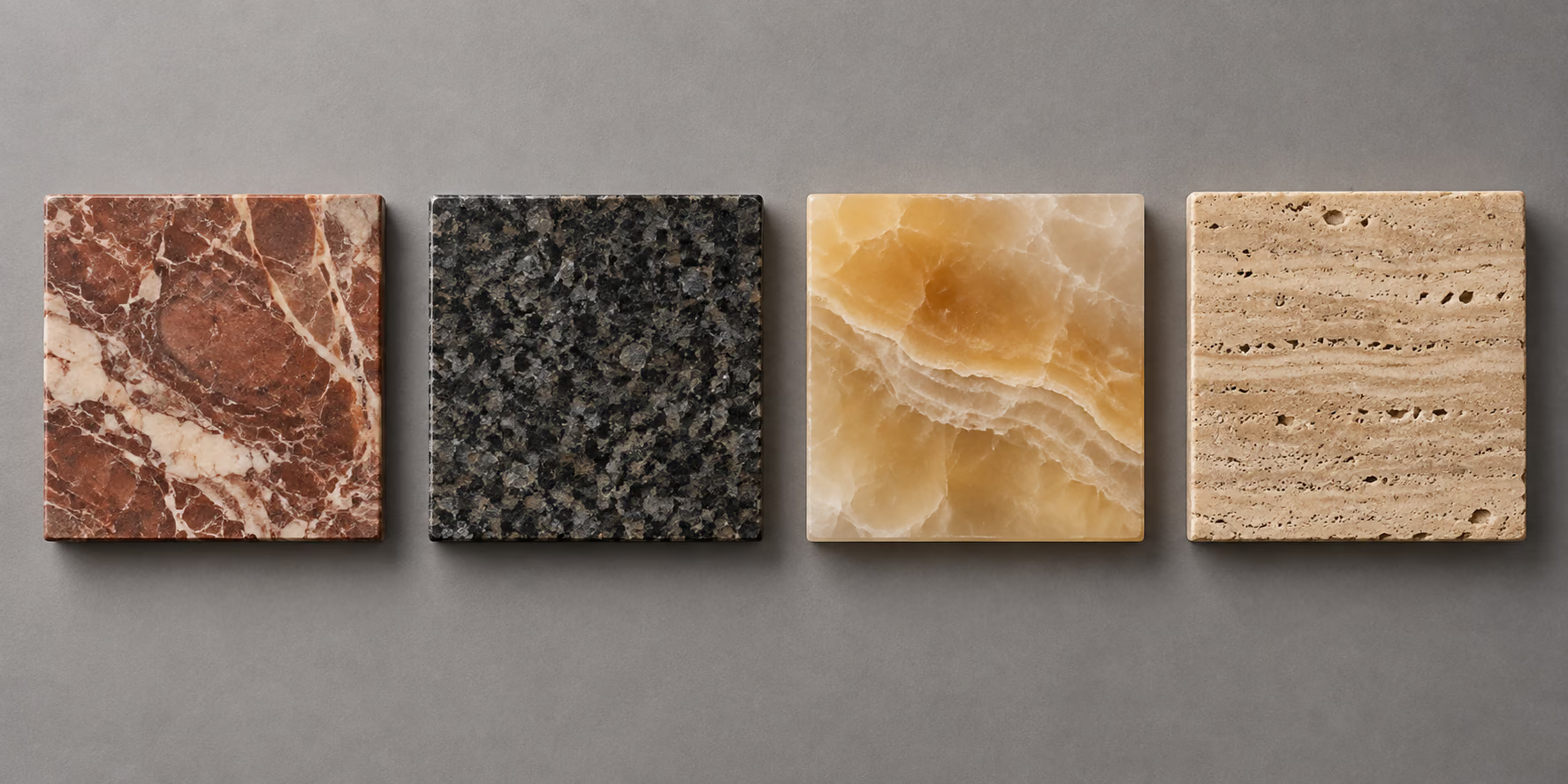
Four materials. Four different reasons to specify them.
These are editorial collections, not a catalogue wall. Each one groups a material family by what it does in a building rather than by what it costs, because the cost question only becomes answerable once the performance question is settled.
A catalogue invites you to choose by appearance and discover the consequences later. These pages do it the other way round: what the material is for, what it demands in return, and where it should not go.
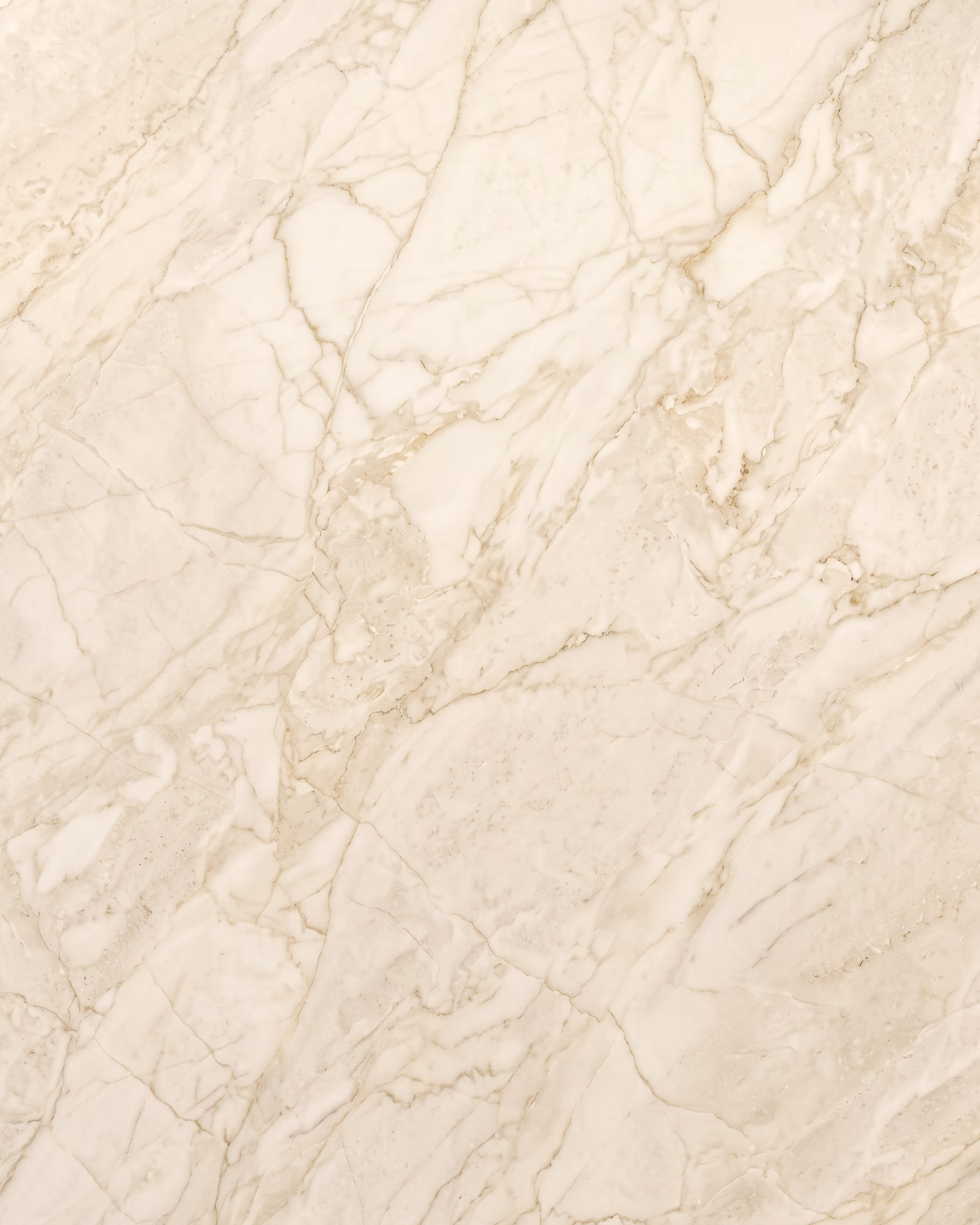 Marble - White | GreyPurity CollectionWhite and ivory Algerian marble — the quietest surface in the house, and the hardest to get right.
 Marble - BlackMonolith CollectionBlack Algerian marble — one decisive surface, and the room is finished.
 Marble - ColorsSignature CollectionAlgerian coloured marble — the collection the house is built on.
 OnyxLumen CollectionTranslucent onyx — the rarest material in the house, and the most demanding.
Choosing between them
The shortest useful rule: if the surface is the point of the room, start with marble or onyx. If the surface has to survive weather, grit and public traffic, start with granite. If you want warmth and tactility that ages well, start with travertine.
That gets you to the right family. Within it, the decisions that matter are finish, cut direction and variation — and those are the ones that change what a material costs to maintain and how it looks in year five.
Together
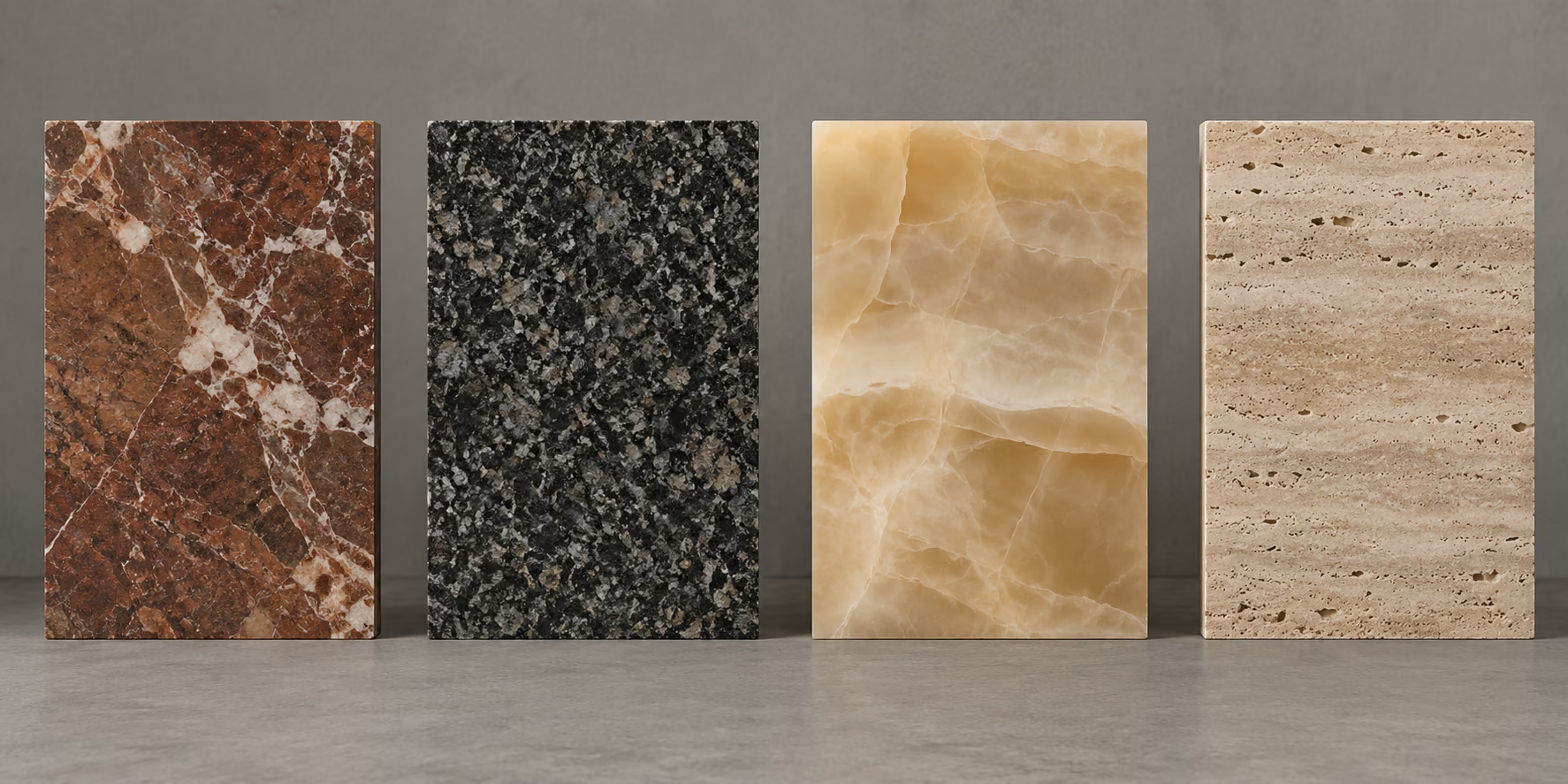
Most projects use two or three
A hotel rarely specifies one material. It specifies a granite that takes the entrance grit, a marble that carries the lobby wall, an onyx that lights the bar, and a travertine that runs quietly through the spa. The design work is choosing them; the supply work is making them agree.
Agreement means three things in practice: that the tones sit together under the building’s actual lighting rather than under a showroom’s; that the finishes are specified so the transitions between materials are deliberate; and that thicknesses and tolerances are coordinated so the fixings and the floor build-ups work.
This is the conversation worth having early, while the drawing can still move. It is considerably harder once the material has been ordered.
Questions
Before you choose a family
Can I see the actual slabs before committing?
Yes. Selection happens at slab level for anything where the surface matters, with photography attached to the lot identifier, and in person where the project justifies it. What you approve is recorded, and the record is what ships.
How many stones are in each collection?
Deliberately few. A short list that we can actually supply, in quantity, with continuity, is worth more than a long one that is really a photo library. If what you need is not there, ask — the collections show what is characteristic, not everything that exists.
Do you publish prices?
No. Price on a natural material depends on block yield, format, thickness, finish and quantity — a figure published against a stone name would be wrong for almost every project that read it. Tell us the requirement and you get a real number.
What if two materials need to match across a project?
That is a supply decision taken before the design is frozen, not a selection made afterwards. Tone, finish and lot continuity are agreed together, and the material is reserved against the project while the design develops.