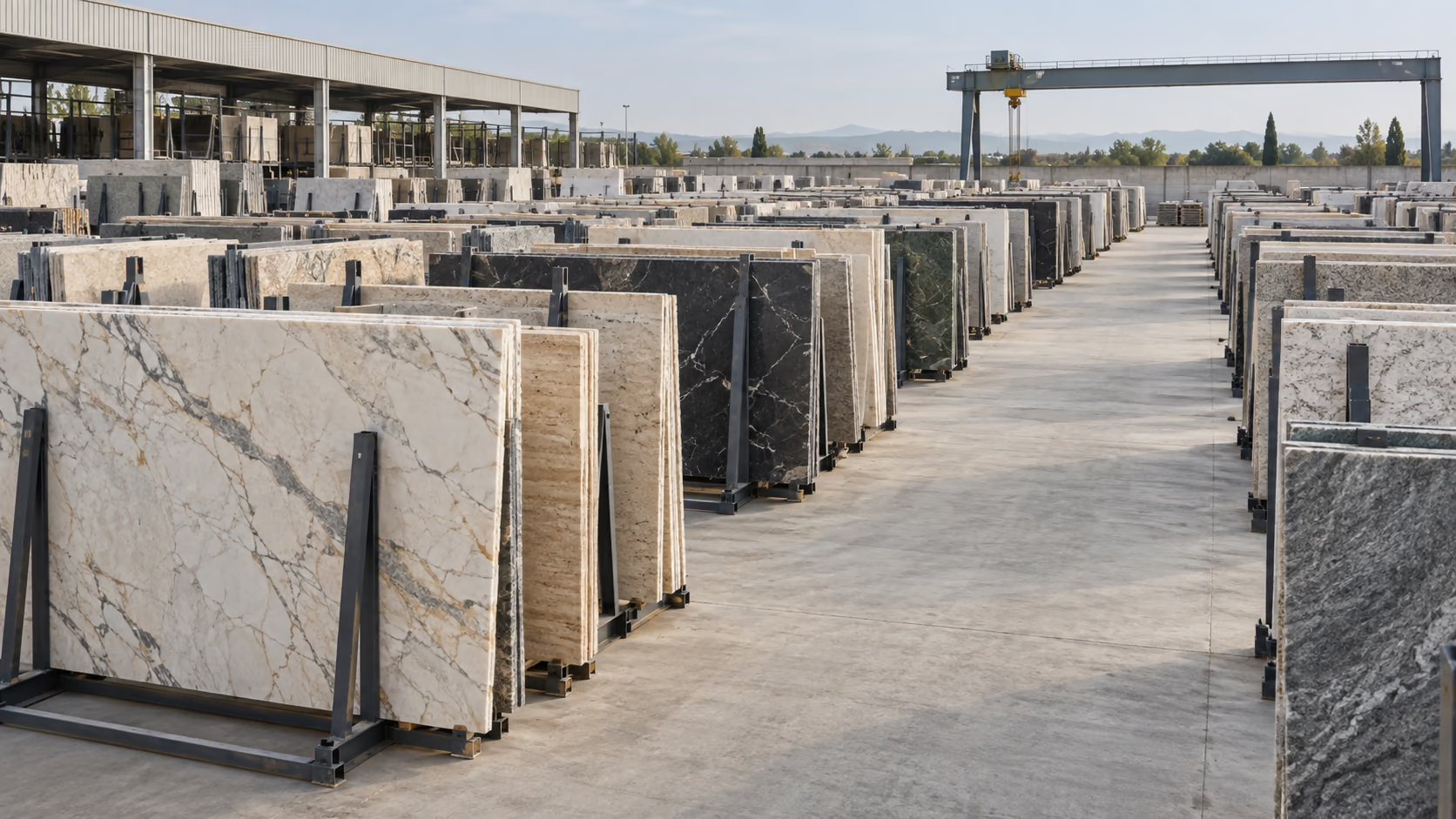
For Trade
Supply continuity, documented quality, and export handled properly.
For a distributor or fabricator the question is not whether a stone is beautiful. It is whether the second container matches the first, whether the paperwork clears, and whether the supplier answers the phone when something is wrong.
Those three are the whole relationship. Everything below is how each one is handled here, including the cases where the honest answer is no.
Capability
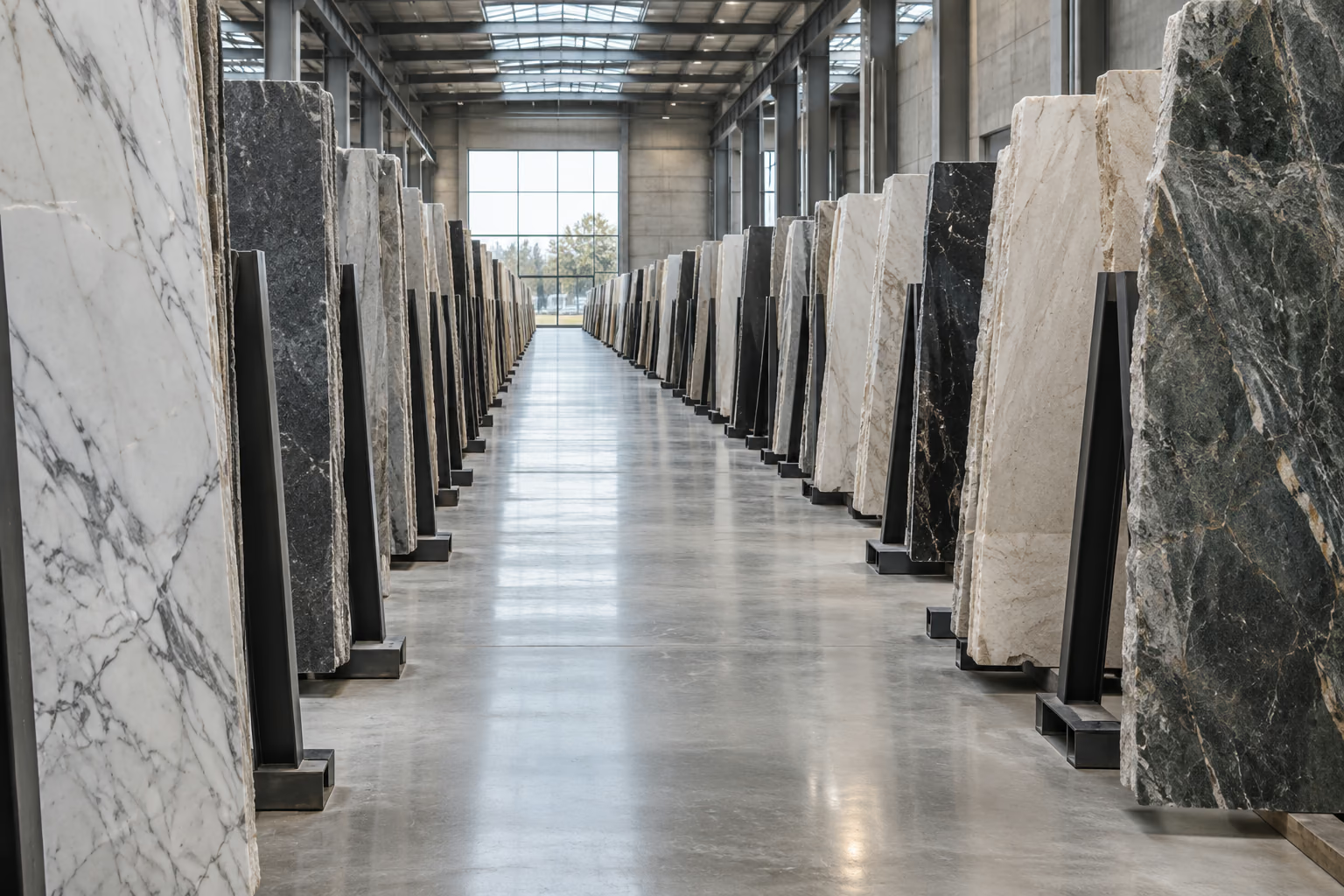
What we supply
Continuity
The second container problem
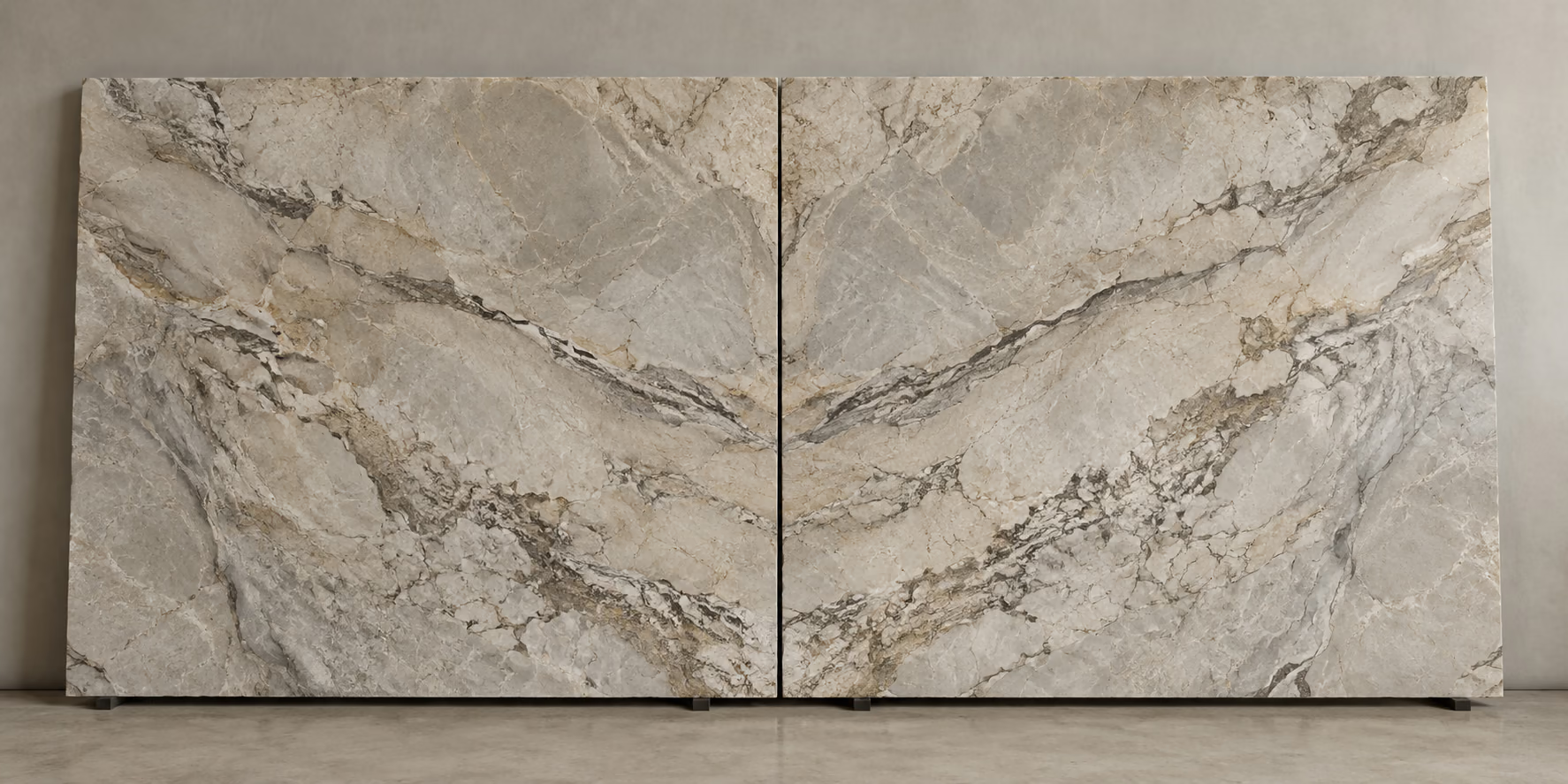
Repeatability is the hardest thing to buy in natural stone and the thing distributors need most. We handle it by working at the block, recording variation per lot, and reserving material against a forecast rather than treating each order as new.
In practice that means a reorder starts from a record rather than from a search: which block, which lot, what variation was assigned, what remains, and what the nearest match is if it does not. A distributor can answer their own customer before committing.
Where a material genuinely cannot be repeated — small onyx lots especially — we say so upfront rather than discovering it together at reorder. A supplier who never says that is a supplier who has not looked.
Export
Documentation and delivery
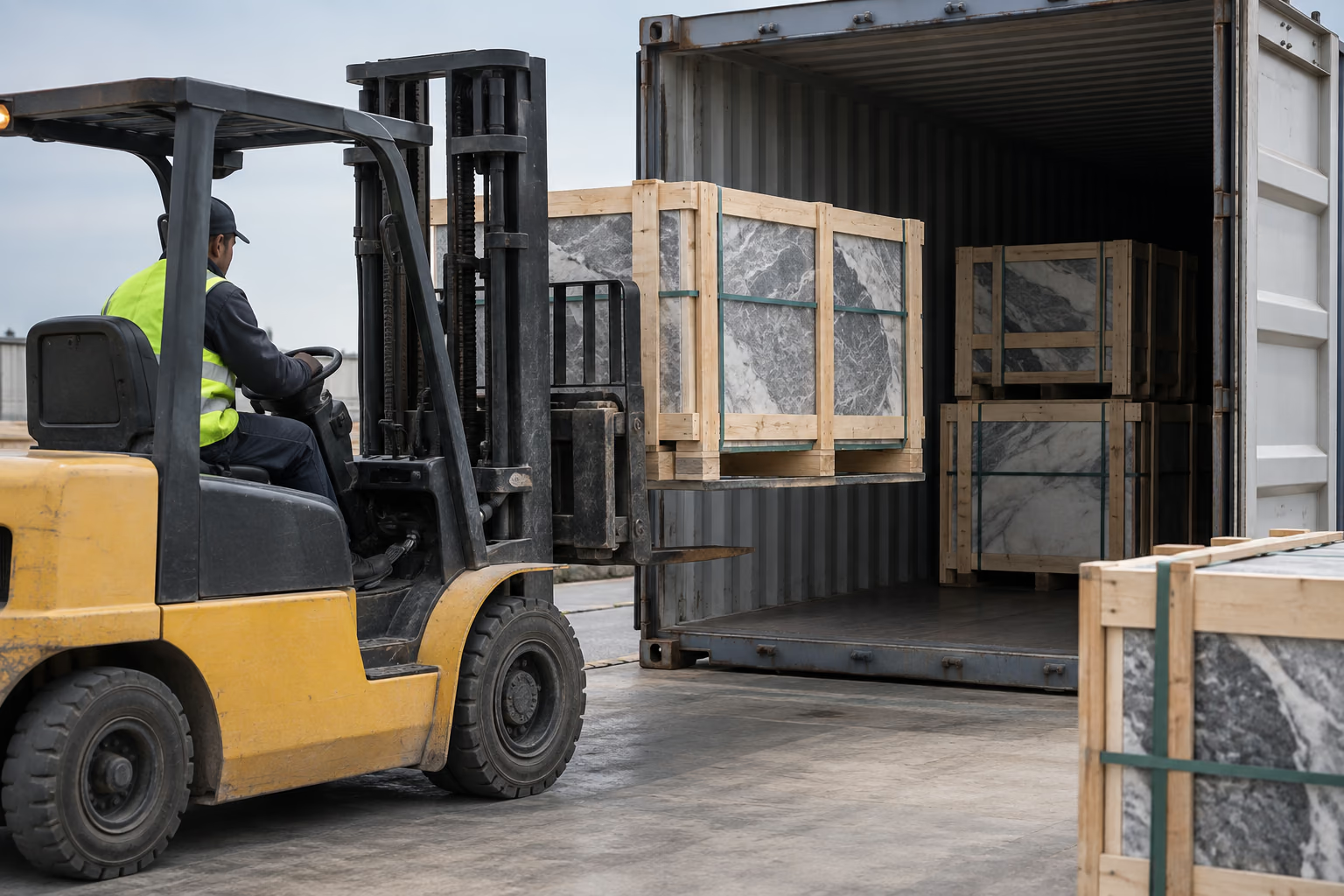
Packing lists match the lot record slab for slab. Inspection records are available for the lot you bought. Documents are prepared for the destination requirements rather than generically.
Freight, insurance and inland transport are quoted as line items so you can see what you are paying for and substitute your own where you prefer.
Quality control
Inspection before it ships, not after it arrives
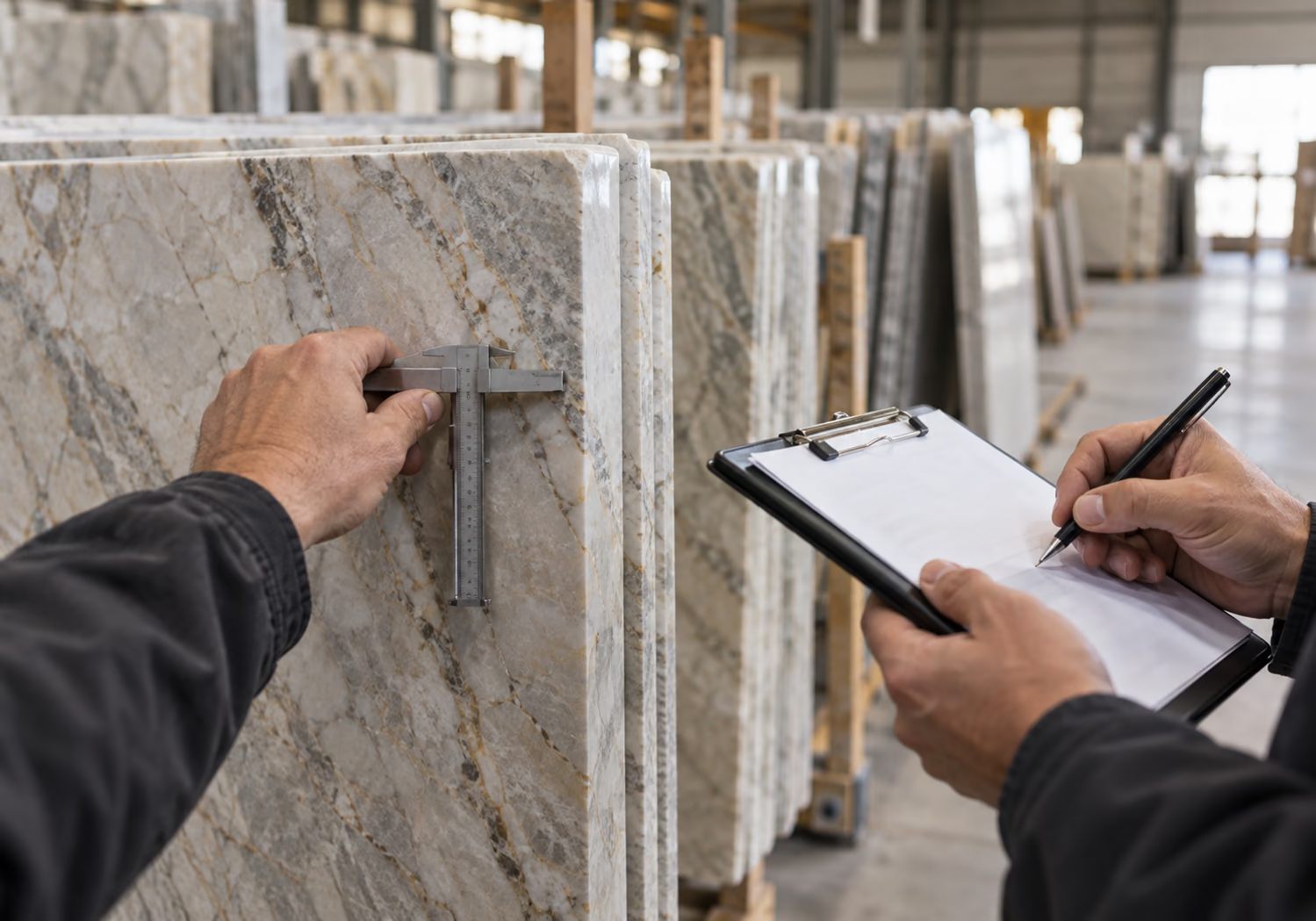
Every lot passes a release gate before it leaves. Photographs, dimensions, grade and defect records attach to the lot identifier, so a claim can be assessed against evidence rather than recollection.
Third-party inspection can be accommodated where your process requires it — the record exists precisely so an independent party can check it rather than take our word.
Questions
What buyers ask before the first order
What are your minimum quantities?
There is no published minimum. What matters commercially is whether a quantity can be taken from a coherent set of blocks: a full container of one material is straightforward, a small quantity of several is a different conversation about cost per square metre.
Can we buy blocks rather than finished slabs?
Yes. Blocks, slabs, tiles and cut-to-size are all supplied, and buying at block level is the right answer for a fabricator with their own sawing capacity who wants to control cut direction and yield.
Which Incoterm do you recommend?
Whichever matches where you want the risk to transfer, and it is agreed in writing rather than assumed. Buyers with their own freight usually take FOB; buyers who want a landed number take CIF or DAP. The quote is itemised either way, so the freight component is visible rather than buried.
How do you handle a damage claim?
Against the record: lot identifier, inspection photography, packing list, crate. Damage in transit is a different conversation from a material defect, and the record is what separates them. That is also why inspection happens before shipment rather than after arrival.
Can we use our own inspector or agent?
Yes, and it is welcome. Nothing in the process depends on you taking our assessment on trust.
Request a Quote
Tell us what you are building
A specialist reviews every request. You will hear from a person, not an autoresponder.